
193nm AR lenses

Specifications

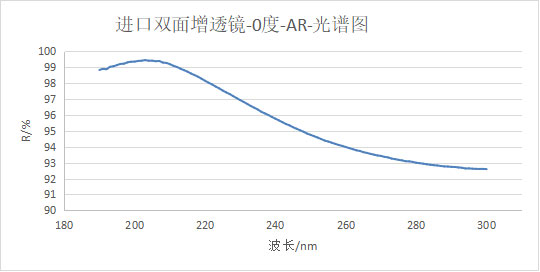
193nm AR lenses are deep ultraviolet (DUV) anti-reflection lenses specifically designed to achieve ultra-low reflectance and high laser damage threshold at the 193nm (ArF excimer laser) wavelength, widely used in advanced applications such as semiconductor lithography objectives, laser medical equipment, and precision measurement systems. They address the issues of reflection loss and high-energy damage on lens surfaces caused by 193nm deep ultraviolet light, ensuring system transmittance and long-term stability. Unlike visible-light AR lenses, these must simultaneously achieve high DUV transmission, low birefringence, and high radiation resistance, imposing extremely stringent requirements on both materials and coatings.

Key Parameters and Specifications.

Substrate Material: Commonly used materials include CaF₂ (calcium fluoride) LD-Grade A (high DUV transmission, low birefringence) or fused silica (FS), requiring low absorption and low scattering.
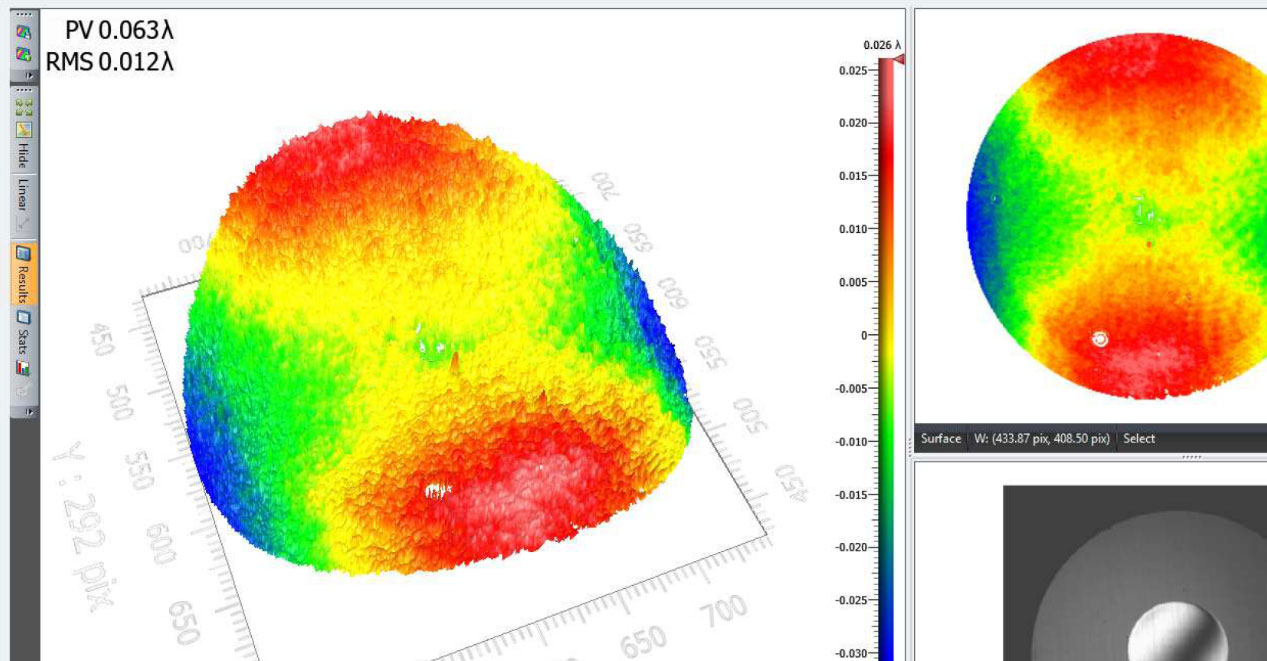
Surface Form and Quality: Surface form better than λ/10, surface quality 10-5 scratch-dig, ensuring wavefront quality.

Cooperation Inquiry

*
*
*
*
*
*

193nm AR lenses are deep ultraviolet (DUV) anti-reflection lenses specifically designed to achieve ultra-low reflectance and high laser damage threshold at the 193nm (ArF excimer laser) wavelength, widely used in advanced applications such as semiconductor lithography objectives, laser medical equipment, and precision measurement systems. They address the issues of reflection loss and high-energy damage on lens surfaces caused by 193nm deep ultraviolet light, ensuring system transmittance and long-term stability. Unlike visible-light AR lenses, these must simultaneously achieve high DUV transmission, low birefringence, and high radiation resistance, imposing extremely stringent requirements on both materials and coatings.

Key Parameters and Specifications.

Substrate Material: Commonly used materials include CaF₂ (calcium fluoride) LD-Grade A (high DUV transmission, low birefringence) or fused silica (FS), requiring low absorption and low scattering.
Surface Form and Quality: Surface form better than λ/10, surface quality 10-5 scratch-dig, ensuring wavefront quality.