
Specifications
Basic Principles and Structure
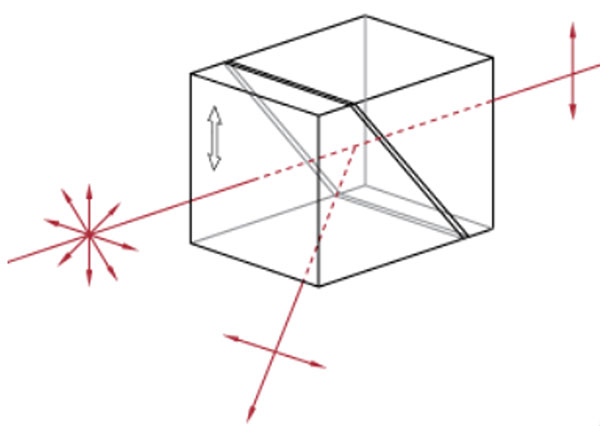
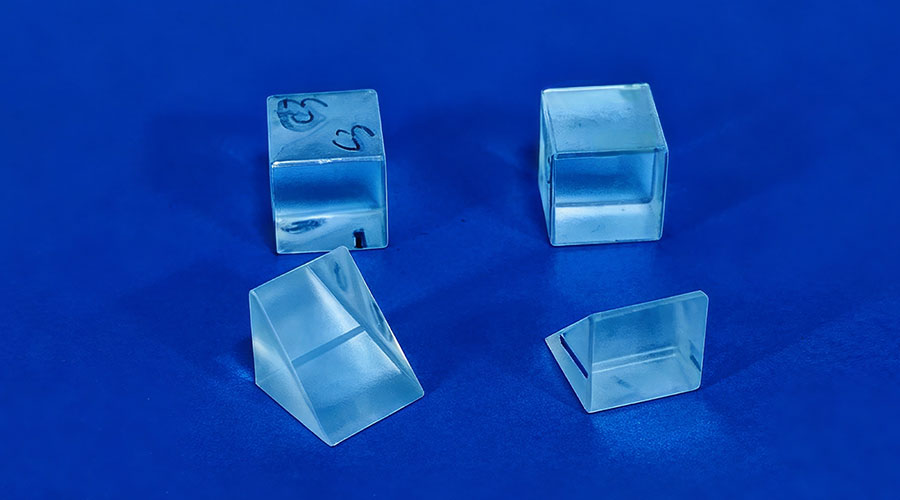
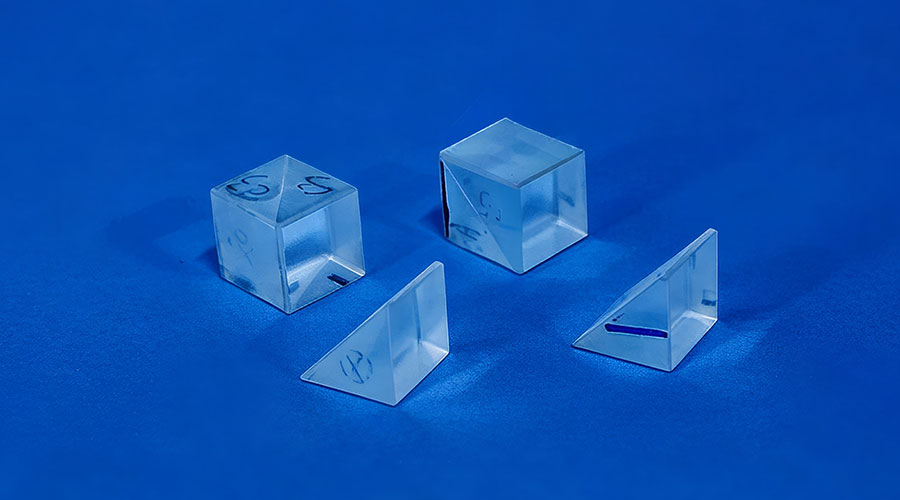
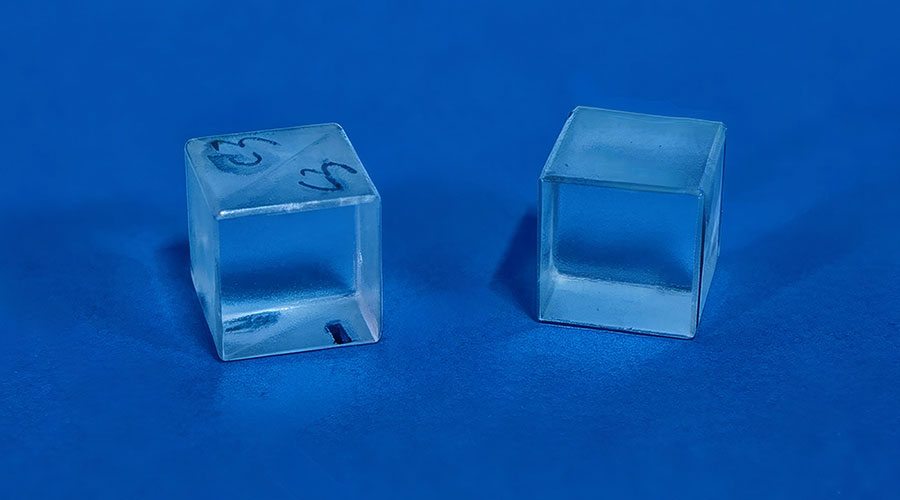
- Structure: Composed of two birefringent crystal prisms (special UV materials) joined together using a cemented structure process that preserves an air gap.
- Optical Axis: The optical axes of both birefringent crystal prisms are strictly parallel to each other, and parallel to the line of intersection between the entrance and reflection faces.
- Working Principle (consistent with standard version, but optimized for 193nm)
1. 193nm natural light is normally incident and decomposed within the prism into o-ray (s-polarization, perpendicular to optical axis) and e-ray (p-polarization, parallel to optical axis).
2. Both beams strike the air-gap interface: o-ray: higher refractive index, incident angle **> critical angle**, undergoes total internal reflection and is absorbed by the blackened side face. e-ray: lower refractive index, incident angle **< critical angle**, passes directly through the air gap and into the second crystal.
3. Final output is pure p-polarized 193nm laser light.

Key Performance Parameters
- Operating Wavelength: 193.368nm (ArF excimer laser center wavelength)
- Material: Deep ultraviolet grade crystal
- Design: Air-gap Glan-Taylor
- Extinction Ratio: ≥ 10,000:1 to 100,000:1
- Field Angle: ±3°~±5° (narrow, suitable for collimated laser only)
- Laser Damage Threshold: >500 MW/cm² (ns pulse, 193nm)
- Surface Quality: 20/10 scratch-dig (ultra-precision)
- Wavefront Distortion: ≤ λ/4 @632.8nm
Main Application Scenarios
- Semiconductor Lithography (ArF Excimer Lithography). Core polarization control component in 193nm immersion lithography systems. Used for intensity stabilization, polarization state purification, and beam shaping to ensure uniformity and precision of lithographic line patterns.
- Deep Ultraviolet Laser Micromachining. Semiconductor wafer dicing, silicon wafer scribing, sapphire/glass drilling. Controls high-power 193nm laser polarization to improve machining precision and efficiency.
- Precision Spectroscopy and Measurement. 193nm UV ellipsometers, spectrometers, and fluorescence detection systems. Used in research for polarization state manipulation in quantum optics and atomic physics.