
Rochon prisms

Specifications

 Basic Principles and Structure

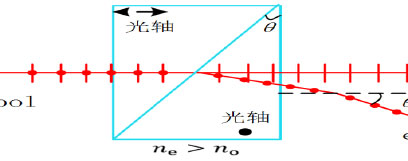
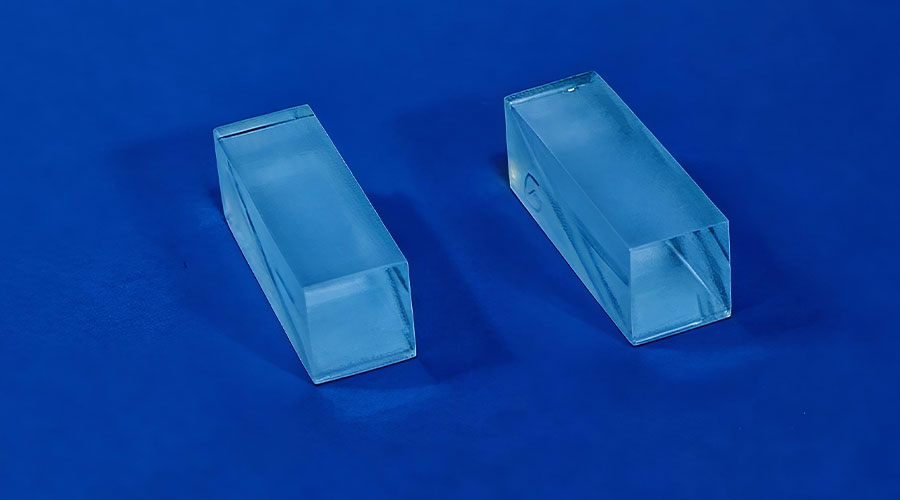
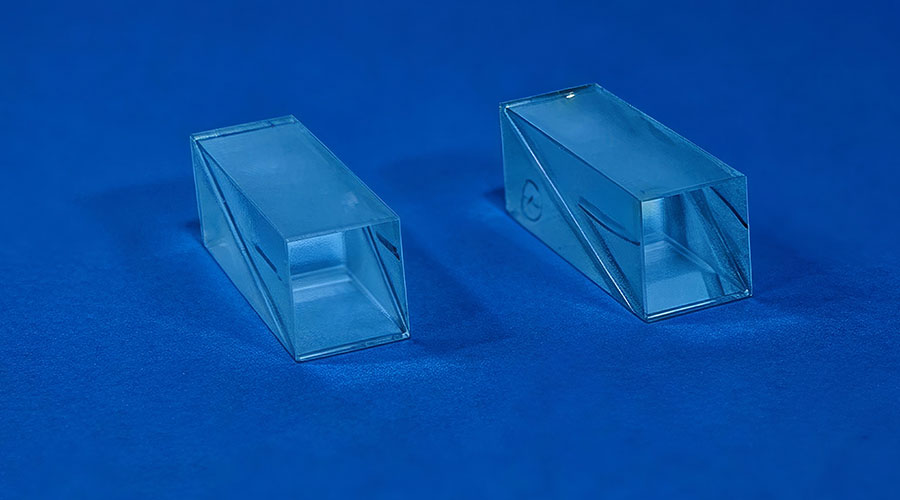
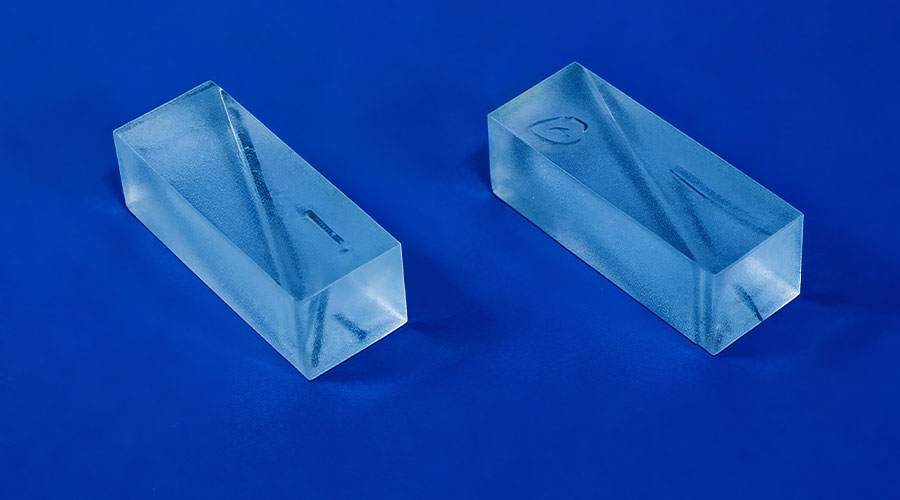
  • Structure: Composed of two birefringent crystal prisms (special UV materials) joined together using an "optical contact" (adhesive-free) bonding process.
  • Optical Axis: One prism's optical axis is parallel to the incident light, while the other is perpendicular to it.
  • Working Principle:
1.   Unpolarized light enters the first prism: o-ray and e-ray propagate at the same speed and in the same direction (no separation).
2.   Upon entering the second prism: the refractive index of the o-ray remains unchanged and exits along the original direction; the refractive index of the e-ray changes abruptly, causing refractive deviation.
3.   Output result: two orthogonally linearly polarized beams — one traveling straight (o-ray) and one deflected (e-ray).
 

193nm Key Parameters

  • Operating Wavelength: 193 nm (deep ultraviolet)
  • Crystal Material: Special UV materials
  • Extinction Ratio: **<1×10⁻⁴** (>10,000:1)
  • Separation Angle: ~7°@193nm
  • Clear Aperture: 5–40 mm
  • Bonding: Optical contact (adhesive-free) (compatible with high-power UV lasers)
  • Transmittance: >65% @193nm

Main Application Scenarios

  • Semiconductor Lithography: Polarization control and beam splitting in 193nm lithography systems.
  • Deep Ultraviolet Lasers: Polarization, beam splitting, and detection of 193nm excimer lasers.
  • Precision Optical Measurement: Ellipsometers, spectrometers (deep ultraviolet band).
  • Scientific Instruments: UV interferometers, lidar, optical metrology.

Cooperation Inquiry

*
*
*
*
*
*